Telescopes

The galaxy NGC 4485 altered by a cosmic clash

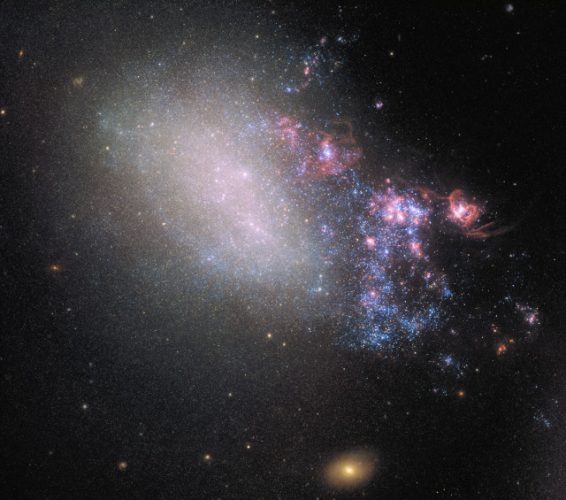
A new image captured by the Hubble Space Telescope’s Wide Field Camera 3 (WFC3) and Advanced Camera for Surveys (ACS) instruments portrays the galaxy NGC 4485. It’s an irregular galaxy, which means that its shape is not among the normal ones for galaxies, a consequence of its passage through a much larger neighbor, NGC 4490, which altered the balance inside it and among other things also started the formation of new stars.

The formation of the Orion Source I system has points in common with that of the solar system

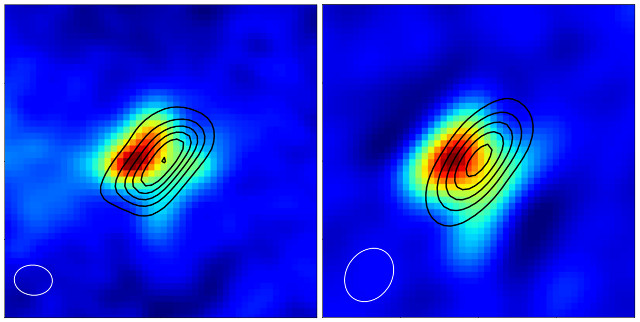
An article published in “The Astrophysical Journal” reports the mapping of aluminum monoxide in a cloud around the young star Orion Source I. A team led by Shogo Tachibana of the University of Tokyo used the ALMA radio telescope to study the protoplanetary disk around to the star discovering that molecule in a cloud of limited distribution, which suggests that in its gas form it quickly condenses to form solid grains. That’s an interesting discovery because aluminum monoxide was discovered in meteorites such as the one known as Allende meteorite and that suggests that there are points in common between the history of the solar system and that of the Orion Source I system.

The unexpected brightness of the earliest galaxies in the universe offers clues to a crucial moment in its evolution

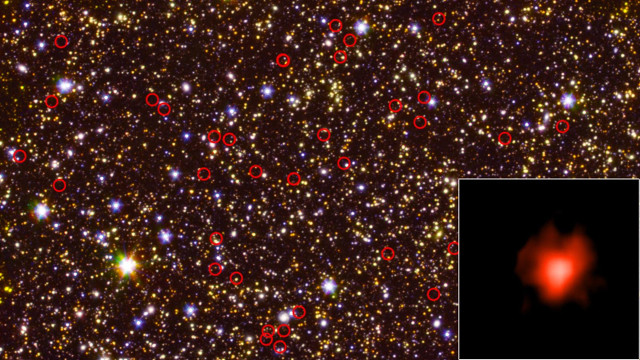
An article published in the journal “Monthly Notices of the Royal Astronomical Society” shows evidence that the oldest galaxies in the universe were brighter than expected. A team of researchers combined observations made with the Hubble and Spitzer space telescopes of galaxies that formed less than a billion years after the Big Bang and discovered an unexpected infrared brightness. That’s the consequence of the release of ionizing radiation and that can offer new clues to the epoch of reionization, a crucial moment in the history of the universe.

A study of gravity waves in blue supergiant stars

An article published in the journal “Nature Astronomy” reports the discovery that almost all blue supergiant stars show a shimmer in brightness on their surface. A team of researchers coordinated by the Katholieke Universiteit (KU) of Leuven, Belgium, used both observations made with NASA’s Kepler and TESS space telescopes and computer simulations based also on asteroseismology to study them thanks to the fact that that shimmer is caused by the presence of gravity waves on the surface of those very massive stars.

Thousands of images from the Hubble Space Telescope provide a wide view of the universe and its history

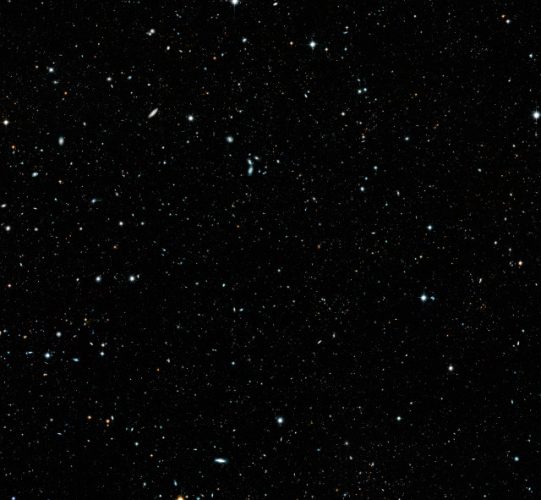
A mosaic of images created by combining 7,500 images captured by the Hubble Space Telescope offers a portrait of a part of the universe containing 265,000 galaxies up to 13.3 billion light years away, which means that we see the most distant of them as they were about 500 million years after the Big Bang. The result was named the Hubble Legacy Field and also combines observations taken from various deep field campaigns of the past years at wavelengths ranging from ultraviolets to near infrareds. It also shows the universe that evolves over time.