Landers / Rovers

Thiophene structure

An article published in the journal “Astrobiology” reports a study on the possible origin of organic compounds known as thiophenes discovered on Mars by NASA’s Mars Rover Curiosity. Jacob Heinz of the Technische Universität in Berlin and Dirk Schulze-Makuch of Washington State University described some possible processes leading to the formation of thiophenes. These possible processes can be non-biological or biological, and the problem is to find evidence that points to one of them. Thiophenes also exist on Earth and there’s a tendency to think that they’re formed as a result of biological processes, but on Mars this would mean that life forms exist.

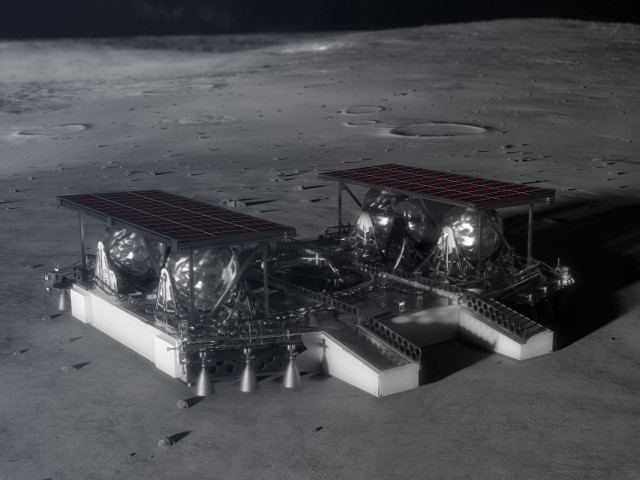
Artist's concept of lander on the Moon's surface (Image NASA)

NASA presented a medium-sized lunar lander concept that could be used during missions in the next few years within the Artemis program. The aim is to bring human beings back to the Moon, but manned missions involve a series of scientific studies with the aim of creating a stable base. Various scientific instruments and rovers will be needed that can make explorations on the lunar surface, payloads that can be brought to the surface by a lander of a type compared to a pallet. A technical publication of the concept offers references for the industries that collaborate with NASA.

Artist's concept of Starship with lander on the Moon (Image courtesy SpaceX)

NASA has announced the selection of five more companies within the program called Commercial Lunar Payload Services (CLPS). They’re added to the ones announced in November 2018 for a total of 14 companies that will be eligible to bid on proposals to provide services to send various types of cargoes to the Moon. They’re support services to the Artemis program which aims to send humans back to the Moon. There’s the well-known SpaceX, another company that already has contracts with NASA such as Sierra Nevada Corporation, an ambitious company that has yet to show what it can do such as Blue Origin and two lesser known companies such as Ceres Robotics and Tyvak Nano-Satellite Systems Inc.

Oxygen spikes in Mars atmosphere are a new mystery

An article published in the “Journal of Geophysical Research: Planets” reports an analysis of the composition of the atmosphere of the planet Mars based on data collected by NASA’s Mars Rover Curiosity. A team of researchers led by Melissa Trainer of NASA’s Goddard Space Center confirmed the presence of various gases already known with seasonal variations due to carbon dioxide’s freezing and evaporation. A surprise came from the detection of a remarkable growth of oxygen in spring and its drop back to the previous levels in fall. This is a new mystery added to that of the presence of methane on the red planet.

Jeff Bezos during hls announcement (Photo courtesy Blue Origin. All rights reserved)

Yesterday, at the International Astronautical Congress 2019 being held in Washington, D.C., Jeff Bezos, Blue Origin’s founder, announced an alliance of his company with other aerospace giants to work together within NASA’s Artemis program and bring humans back to the Moon by 2024. At the base of the solution he proposed, called Human Landing System, there’s the Blue Moon lunar lander unveiled by Bezos himself in May 2019.