Space companies / agencies

Blogs about space companies and/or agencies

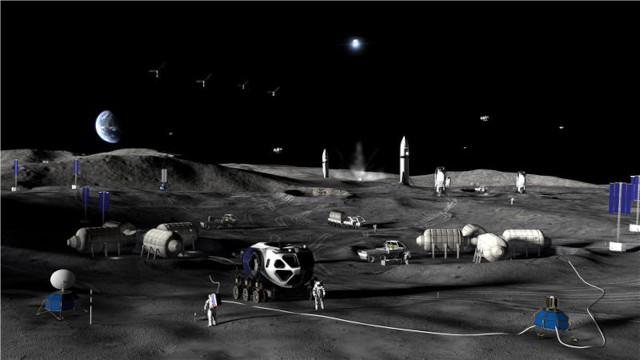
Artist's concept of the Moon base (Image NASA)

Yesterday, NASA held its Ignition event, featuring a series of announcements regarding its space program. Announcements were expected from new Administrator Jared Isaacman and other agency managers in connection with the Artemis program, to clarify the agency’s intentions regarding the return of astronauts to the Moon. From this perspective, the intention that was announced is to accelerate the pace of missions, also in order to build a permanent base on the Moon. In this new vision, the Lunar Gateway project might be abandoned, although officially, it remains relevant in the long term.

The program for missions to Mars was also part of the event. In this case, the Space Reactor-1 Freedom (SR-1 Freedom) mission was introduced, to be conducted using a spacecraft that will use nuclear electric propulsion, scheduled for launch in December 2028. A fleet of Skyfall helicopters is programmed to be on board, intended to continue exploration of the red planet.

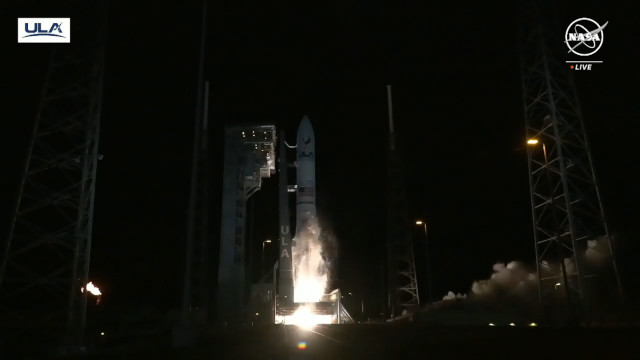
The Vulcan rocket blasting off (Image NASA TV)

A little while ago, ULA’s Vulcan rocket launched on its maiden mission, formally designated as CERT-1. For the occasion, it was carrying Astrobotic Technology’s Peregrine Moon lander, which separated from the rocket stage called Centaur after about 50 minutes. A capsule containing ashes of various famous people was also launched into a heliocentric orbit. The Centaur continued its mission with a few burns and cut-offs of its engine until it goes out of Earth orbit, scheduled after just under 4.5 hours from the launch.

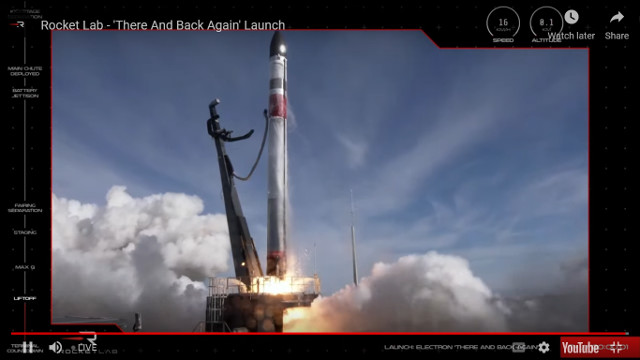
The Electron rocket starts "There And Back Again" mission (Image courtesy Rocket Lab)

A few hours ago, Rocket Lab’s first attempt to use a Sikorsky S-92 helicopter to catch the first stage of its Electron rocket while it was returning to the ground during a mission called “There And Back Again” was successful. The goal is a controlled transport of the first stage to the ground in order to reuse it. After catching it, the pilot found that the load had different characteristics from those experienced during the tests and let go of the first stage, which splashed down and was recovered by Rocket Lab’s ship.

The Moon landers by Dynetics, SpaceX and Blue Origin / National Team

NASA has announced the choice of three companies to design and develop human landing systems for the Artemis program. These are essentially plans for a lunar lander among which one will be selected to be built for the mission that, according to plans, is supposed to bring American astronauts back to the Moon by 2024. The companies selected are Blue Origin (actually the first contractor for a group called National Team), Dynetics, and SpaceX. This stage of development involves a 10-month base period during which companies and NASA will work together on the selected projects. The total contract value is $967 million.

Artist's concept of the Dragon XL cargo spacecraft after separating from the Falcon Heavy rocket's second stage (Image courtesy SpaceX)

NASA has announced that it has selected SpaceX as the first supplier in the Gateway Logistics Services contract to transport cargo, experiments and other supplies to the Lunar Gateway, part of the Artemis program that aims to bring astronauts back to the Moon. At least two missions will be carried out with the Dragon XL cargo spacecraft, a new variant of the Dragon 2 cargo optimized to carry over 5 metric tons of cargo to the Moon’s orbit. The timeline for these missions isn’t clear due to the NASA’s changes of plans, as recently the agency decided to skip the use of the Lunar Gateway for the mission that’s supposed to take place by 2024 and use it in the following years.