Spacecraft

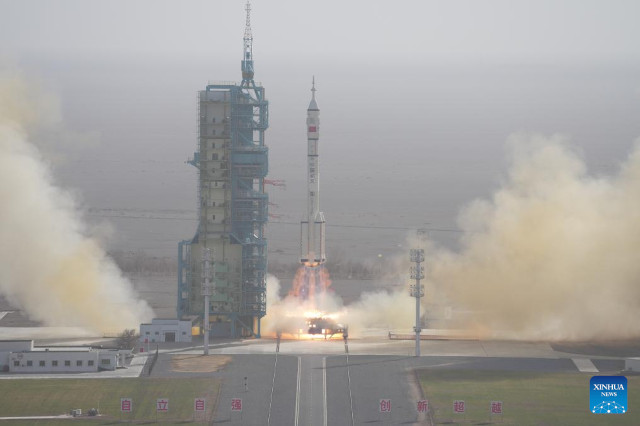
The Shenzhou 22 spacecraft blasting off atop a Long March-2F rocket (Photo courtesy Li Minggang/Xinhua)

Confirmation has arrived that the Shenzhou 22 spacecraft has reached the Tiangong space station with an automated docking maneuver. It launched with no crew aboard about 3.5 hours earlier atop a Long March-2F rocket from the Jiuquan Satellite Launch Center. The Shenzhou 22 was sent to the Tiangong to provide the Shenzhou 21 mission crew with a reliable vehicle to return to Earth.

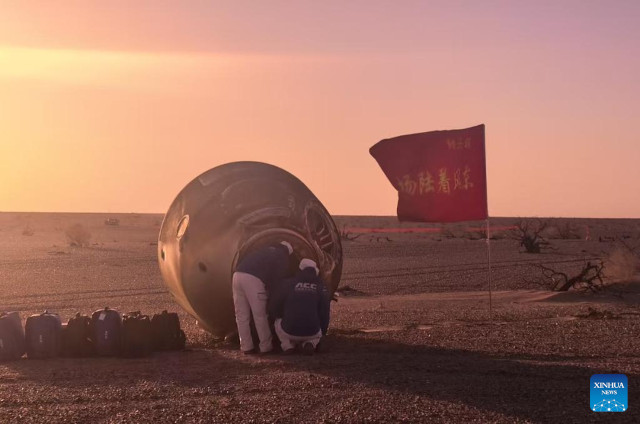
The Shenzhou 21 capsule after landing (Photo courtesy Wang Jiangbo/Xinhua)

A few hours ago, the three Chinese taikonauts from the Shenzhou 20 mission returned to Earth after spending 204 days on the Tiangong space station, where they arrived on April 24, 2024. The three taikonauts—Chen Dong, Chen Zhongrui, and Wang Jie—had left the station about 3.5 hours earlier to land at a site called Dongfeng in China’s Inner Mongolia Autonomous Region. The three taikonauts returned aboard the Shenzhou 21 spacecraft because the Shenzhou 20 spacecraft suffered tiny fractures in a window following the impact of what was likely space debris and was deemed unsafe for human transportation.

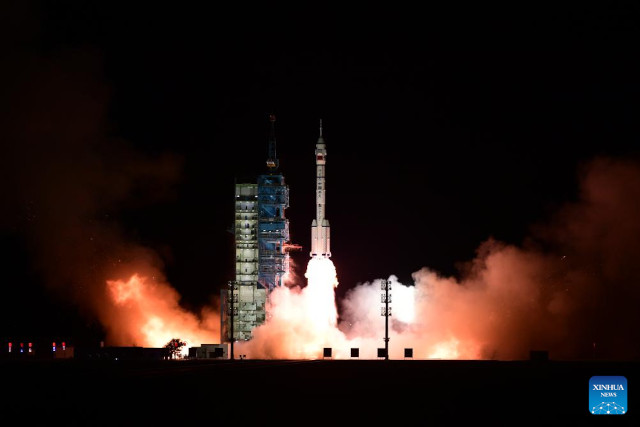
The Shenzhou 21 spacecraft blasting off atop a Long March-2F rocket (Photo courtesy Xinhua)

A confirmation has arrived that three Chinese taikonauts from the Shenzhou 21 mission reached the Chinese space station Tiangong with an automated docking maneuver. They blasted off about 3.5 hours earlier atop a Long March-2F rocket from the Jiuquan Satellite Launch Center. They form the 10th crew of the Chinese space station and will remain there for about six months, the standard duration for a mission.

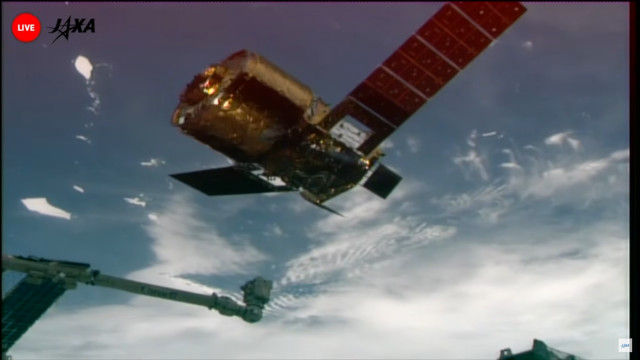
The HTV-X1 cargo spacecraft approaching the International Space Station (Image courtesy JAXA)

A little while ago, the HTV-X1 spacecraft was captured by the International Space Station’s Canadarm2 robotic arm, operated by astronaut Kimiya Yui. The Japanese space cargo ship, which blasted off when it was Sunday in Japan, carries a huge amount of supplies and experiments. After its capture, they started the slow moving of the HTV-X1 to its berthing location on the Harmony module, where it will be safely installed.

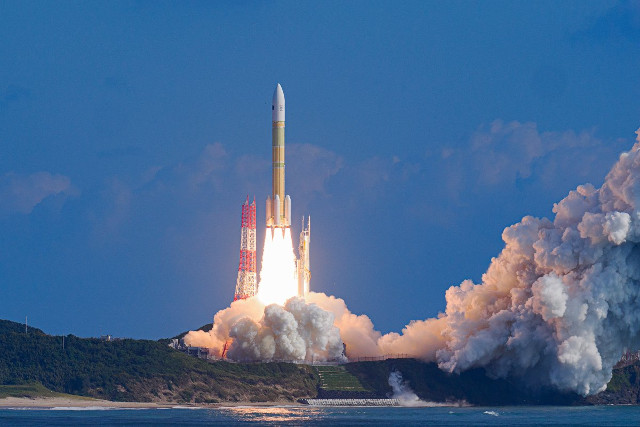
The HTV-X1 cargo spacecraft blasting off atop a H3-24W rocket (Photo courtesy JAXA)

A few hours ago, the HTV-X1 spacecraft blasted off atop a H3-24W rocket from the Tanegashima space center in Japan for a resupply mission to the International Space Station. A little more than 14 minutes after the launch, the cargo spacecraft separated regularly from the rocket’s last stage, entered its preliminary orbit, and deployed its solar panels and navigation antennas. It’s the new Japanese cargo spacecraft HTV-X’s maiden launch.