ESA

View of Mawrth Vallis (Image ESA/DLR/FU Berlin, CC BY-SA 3.0 IGO)

The German space agency DLR has published new photographs of Mawrth Vallis, a large valley on Mars where there are traces of the ancient presence of liquid water. It’s not a surprise because for years scientists have known the presence of phyllosilicates, clay minerals that can only exist where there was water. A view created using a mosaic of nine imagine taken by ESA’s Mars Express space probe’s HRSC instrument shows Mawrth Vallis in all its glory.

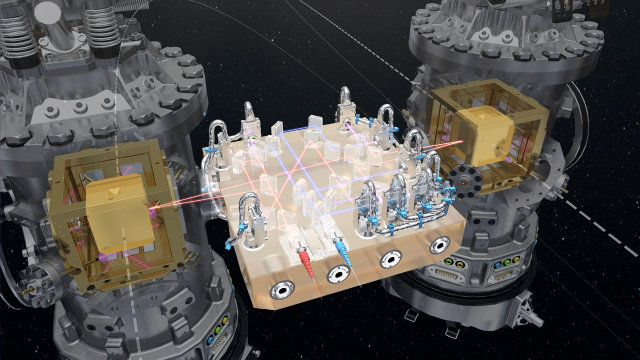
Illustration of the device in the LISA Pathfinder space probe (Image ESA/ATG medialab)

Yesterday ESA held a press conference to announce the results of the LISA Pathfinder space probe’s tests. This demonstration mission of the technologies needed to detect gravitational waves in space has been called a success beyond expectations. The mission team scientists published an article in the journal “Physical Review Letters” which describes the test results.

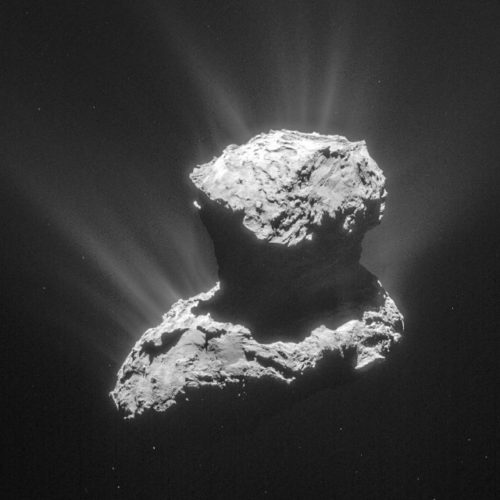
The comet 67P/Churyumov-Gerasimenko photographed on March 25, 2015, one of the moments of the organic molecules detections (Photo ESA/Rosetta/NavCam – CC BY-SA IGO 3.0)

An article published in the journal “Science Advances” describes the discovery of ingredients that are considered key to the origin of life on Earth on the comet 67P/Churyumov-Gerasimenko. In particular, glycine, an amino acid found in proteins, and phosphorus, an element that forms DNA and cell membranes. These observations were made by the ROSINA instrument aboard ESA’s Rosetta space probe.

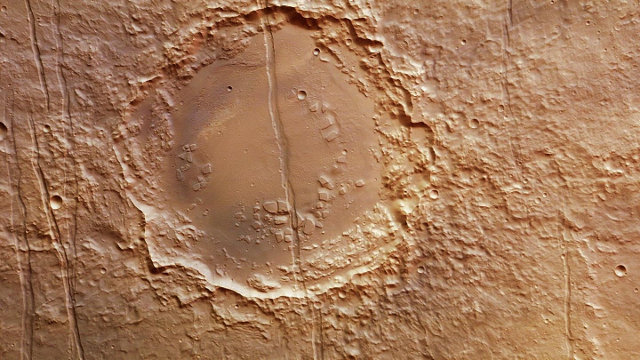
Crater in Memnonia Fossae (Image DLR)

The German space agency DLR published photos of a curious crater marked by a deep rift that splits it in two in the area of ​​Mars called Memnonia Fossae. These are photos taken by the High Resolution Stereo Camera (HRSC), one of the instruments of ESA’s Mars Express space probe.