Launches

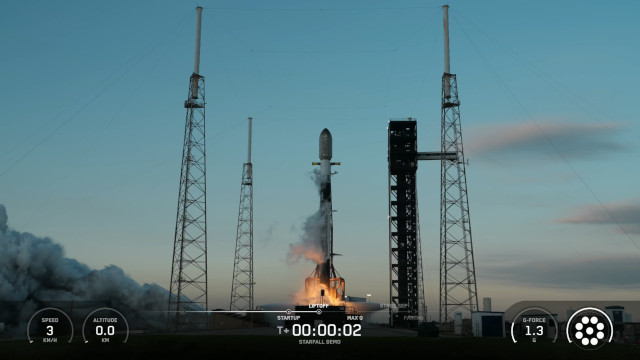
A Falcon 9 rocket lifting off on the Twilight rideshare mission (Image courtesy SpaceX)

A few hours ago, a Falcon 9 rocket launched from Vandenberg Air Force Base on the Twilight rideshare mission, carrying a total of 40 satellites in various phases. About two hours and twenty minutes after launch, the final group of satellites was deployed by SpaceX’s system. Among them were NASA’s Pandora Space Telescope and the BlackCAT and SPARCS nanosatellites, both 30x20x10-centimeter CubeSat-class satellites, part of NASA’s CubeSat Launch Initiative. These satellites will conduct their astronomical observations from low-Earth orbit.

The Zhuque-3 Y1 rocket blasting off (Photo courtesy LandSpace)

A few hours ago, the Chinese Zhuque-3 Y1 rocket blasted off from the Dongfeng commercial space innovation pilot zone, carrying a mass simulator consisting of a prototype of the Haolong cargo spacecraft, currently under development. The second stage successfully reached orbit with payload separation, achieving a successful primary mission upon its debut. LandSpace, the company that developed the rocket, aimed to land the first stage, but this failed due to an anomaly during the reenter maneuvers.

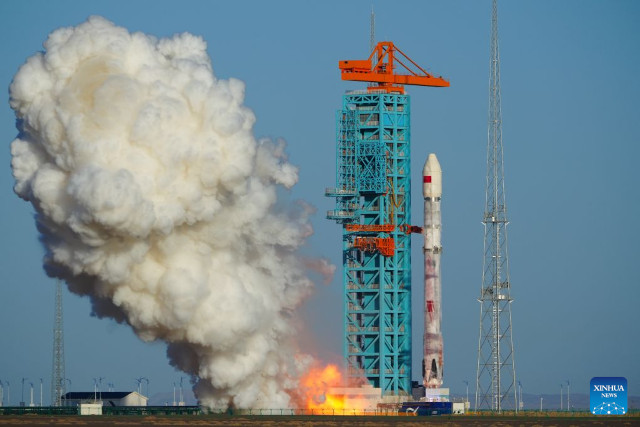
The Shenzhou 22 spacecraft blasting off atop a Long March-2F rocket (Photo courtesy Li Minggang/Xinhua)

Confirmation has arrived that the Shenzhou 22 spacecraft has reached the Tiangong space station with an automated docking maneuver. It launched with no crew aboard about 3.5 hours earlier atop a Long March-2F rocket from the Jiuquan Satellite Launch Center. The Shenzhou 22 was sent to the Tiangong to provide the Shenzhou 21 mission crew with a reliable vehicle to return to Earth.

The Sentinel-6B satellite blasting off atop a Falcon 9 rocket (Image courtesy SpaceX)

A few hours ago, the Sentinel-6B satellite was launched atop a Falcon 9 rocket from the Vandenberg base. After about 57 minutes, it successfully separated from the rocket’s last stage and set off on its course to reach the polar orbit at 1,336 kilometers altitude where its scientific mission will begin, taking over from the Sentinel-6A Michael Freilich satellite, which was launched on November 21, 2020.

The ESCAPADE twin probes blasting off atop a New Glenn rocket (Image courtesy Blue Origin)

A few hours ago, NASA’s ESCAPADE (Escape and Plasma Acceleration and Dynamics Explorers) twin probes were launched atop a Blue Origin New Glenn rocket, which accomplished its mission, called NG-2. One goal for Blue Origin was to land the first stage, which was a successful one just over 9 minutes after launch. After approximately 33 minutes, the probes, named Blue and Gold, separated from the rocket’s second stage and began a long journey to Mars to study its magnetosphere and the Sun’s impact on the red planet.