Launches

The Sentinel-1D satellite blasting off atop an Ariane 6 rocket (Photo courtesy ESA-CNES-ARIANESPACE/Optique vidéo du CSG–P. Piron. ESA Standard Licence)

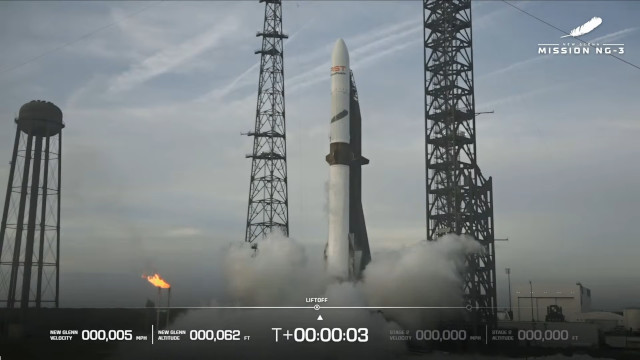
A few hours ago, the Sentinel-1D satellite, part of the Copernicus / GMES, was launched from the Kourou spaceport, in French Guiana, atop an Ariane 6 rocket. After about 34 minutes, the satellite regularly separated from the rocket’s last stage and started sending signals. Its final orbit in low Earth orbit will be at an altitude of about 693 kilometers.

The Shenzhou 21 spacecraft blasting off atop a Long March-2F rocket (Photo courtesy Xinhua)

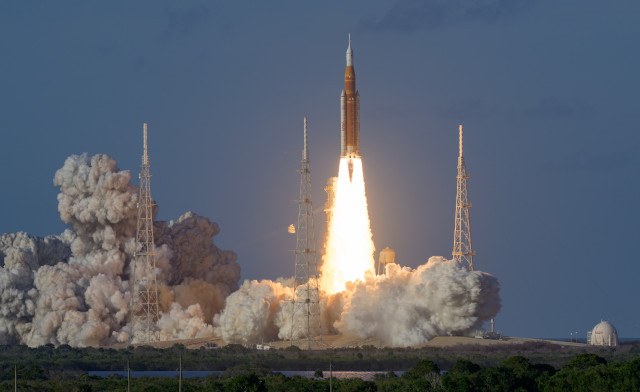
A confirmation has arrived that three Chinese taikonauts from the Shenzhou 21 mission reached the Chinese space station Tiangong with an automated docking maneuver. They blasted off about 3.5 hours earlier atop a Long March-2F rocket from the Jiuquan Satellite Launch Center. They form the 10th crew of the Chinese space station and will remain there for about six months, the standard duration for a mission.

The HTV-X1 cargo spacecraft blasting off atop a H3-24W rocket (Photo courtesy JAXA)

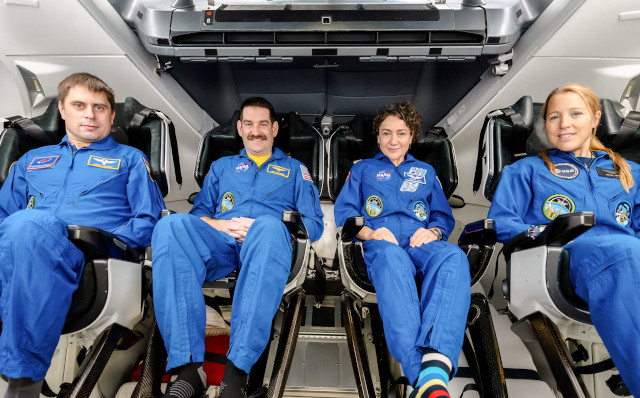
A few hours ago, the HTV-X1 spacecraft blasted off atop a H3-24W rocket from the Tanegashima space center in Japan for a resupply mission to the International Space Station. A little more than 14 minutes after the launch, the cargo spacecraft separated regularly from the rocket’s last stage, entered its preliminary orbit, and deployed its solar panels and navigation antennas. It’s the new Japanese cargo spacecraft HTV-X’s maiden launch.

Super Heavy 15 and Starship 38 at liftoff (Image courtesy SpaceX)

It was the afternoon in the USA when SpaceX conducted a new flight test of its Super Heavy rocket and Starship prototypes, launched from its base in Boca Chica, Texas. This is the 11th test involving the entire system of Elon Musk’s company, which is supposed to revolutionize space travel with an unprecedented transport capacity and being totally reusable. They are advanced prototypes with the Super Heavy identified as Booster 15, at its second flight, and the Starship Block 2 identified as Starship 38 or Ship38 or simply S38.

The Carruthers Geocorona Observatory, IMAP (Interstellar Mapping and Acceleration Probe), and Space Weather Follow On-Lagrange 1 (SWFO-L1) space probe blasting off atop a Falcon 9 rocket (Image NASA+)

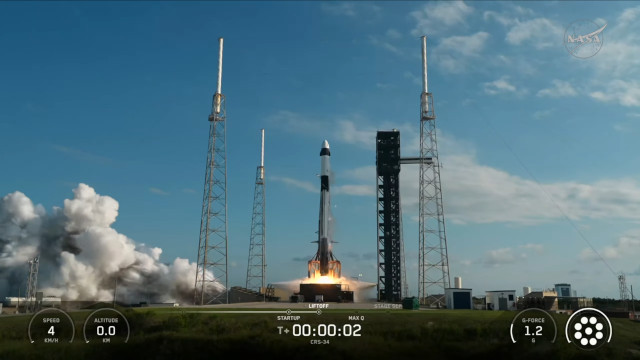
A little while ago, three space probes were launched atop a Falcon 9 rocket from the Kennedy Space Center. After approximately one hour and 23 minutes, they successfully separated from the rocket’s final stage within about 13 minutes and set off on a course that will take them to the area known as L1 (Lagrange 1), about 1.5 million kilometers from Earth, where they will begin their scientific work studying various aspects of space weather.