NASA

The Soyuz MS-22 spacecraft approaching the International Space Station (Image NASA TV)

A few hours ago, the Soyuz MS-22 spacecraft was launched from the Baikonur Cosmodrome in Kazakhstan and after a little more than three hours reached the International Space Station with three new crew members on board. It docked with the Station’s Rassvet module. As is becoming increasingly common for crewed trips as well, the ultra-fast track was used which halves the journey duration.

The "Wildcat Ridge" outcrop on Mars (Image NASA/JPL-Caltech/ASU/MSSS)

NASA’s Mars Rover Perseverance collected rock samples in an outcrop that was named “Wildcat Ridge” in the Jezero Crater on Mars. The analyzes show a geological variety that includes a mudstone that contains organic compounds. These results indicate that the rocks in that area are very different from those found on the crater floor, which were igneous rocks that form underground from volcanic magma and on the surface during volcanic activity. These are very interesting samples considering the mission in the design phase that will aim to bring them back to Earth to conduct in-depth analyzes.

Jupiter seen through three filters applied to the James Webb Space Telescope's NIRCam (Near-Infrared Camera) instrument

NASA has published some photos of Jupiter captured by the James Webb Space Telescope that offer new information on the processes taking place within the largest planet in the solar system. The combination of different infrared filters leads to various results that allow appreciating new details of Jupiter. The colors are different from the real ones precisely because Webb detected them using infrared filters but the results are very interesting for the information they offer on storms, auroras, and various processes taking place on the planet and within it. Some images also include its rings and some of its moons.

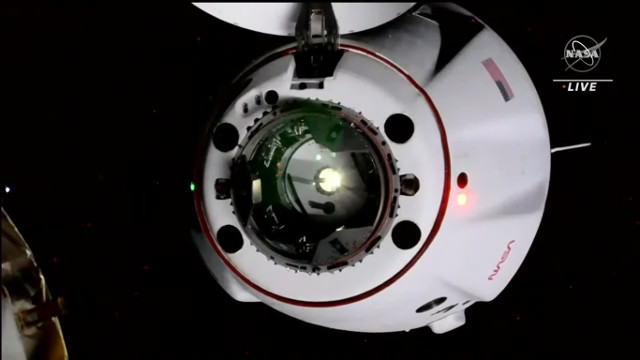
The Dragon cargo spacecraft departing the International Space Station to end its CRS-25 mission

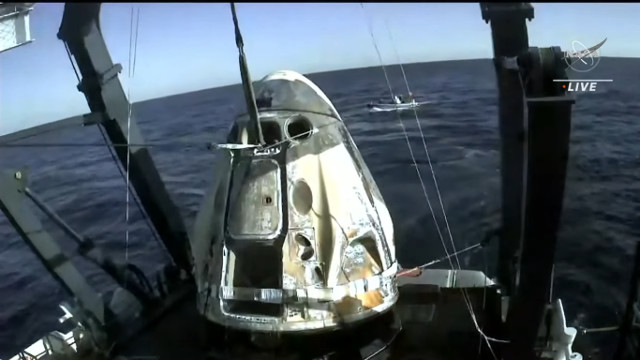
Yesterday, in the American afternoon, SpaceX’s Dragon spacecraft ended its CRS-25 (Cargo Resupply Service 25) mission for NASA splashing down smoothly off the Florida Coast. The Dragon left the International Space Station last Friday. For SpaceX, this was the 5th mission of the 2nd contract with NASA to transport supplies to the Station with the new version of the Dragon cargo spacecraft.

Shortly after the splashdown, SpaceX’s recovery ship went to retrieve the Dragon to transport it to the coast. The cargo brought back to Earth will be delivered to NASA within a few hours. The Dragon spacecraft reached the International Space Station on July 16, 2021.