NASA

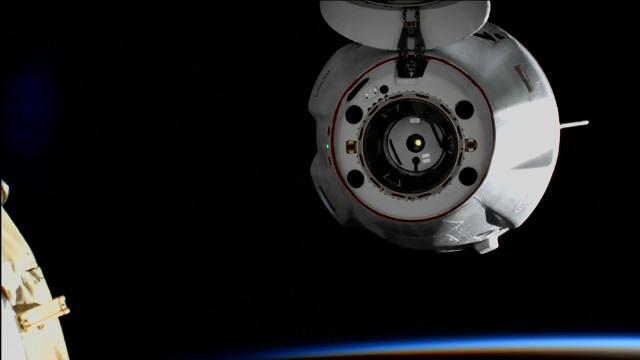
The Dragon cargo spacecraft departing the International Space Station to end its CRS-25 mission

Yesterday, in the American afternoon, SpaceX’s Dragon spacecraft ended its CRS-25 (Cargo Resupply Service 25) mission for NASA splashing down smoothly off the Florida Coast. The Dragon left the International Space Station last Friday. For SpaceX, this was the 5th mission of the 2nd contract with NASA to transport supplies to the Station with the new version of the Dragon cargo spacecraft.

Shortly after the splashdown, SpaceX’s recovery ship went to retrieve the Dragon to transport it to the coast. The cargo brought back to Earth will be delivered to NASA within a few hours. The Dragon spacecraft reached the International Space Station on July 16, 2021.

The Dragon 2 cargo sapcecraft blasting off atop a Falcon 9 rocket to start its CRS-25 mission (Photo NASA)

A few hours ago, the SpaceX Dragon 2 spacecraft blasted off atop a Falcon 9 rocket from the Kennedy Space Center in its CRS-25 (Cargo Resupply Service 25) mission, also referred to as SPX-25. After almost exactly 12 minutes it separated successfully from the rocket’s last stage and went en route. This is the 25th mission for the Dragon/Dragon 2 spacecraft to resupply the International Space Station with various cargoes and then return to Earth, again with various cargoes.

Webb's First Deep Field (Image NASA, ESA, CSA, and STScI)

NASA has released the first official images captured by the James Webb Space Telescope. The presentation was made in collaboration with ESA and CSA (Canadian Space Agency), the other space agencies that work together with NASA on the project and its management. Yesterday, when it was afternoon at the White House, US President Joe Biden personally presented the top image, Webb’s First Deep Field image that includes the SMACS 0723 galaxy cluster as a preview, a proof of the importance of this space telescope.

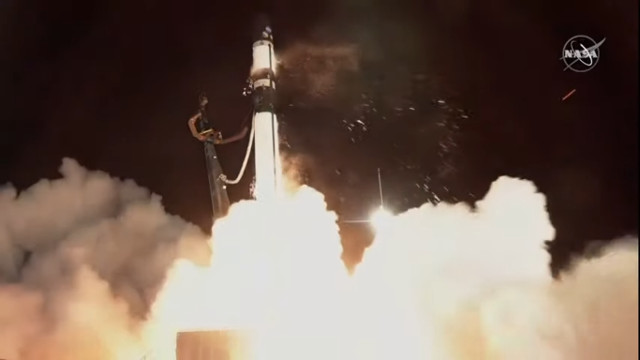
The CAPSTONE satellite blasting off atop an Electron rocket (Image NASA TV)

A little while ago, NASA’s CAPSTONE satellite was launched atop a Rocket Lab Electron rocket from the base in New Zealand. For about six days, the rocket’s upper Photon stage will carry CAPSTONE toward the Moon and then separate and let it travel for more than four months. Eventually, this CubeSat-class satellite will enter a so-called near-rectilinear halo orbit (NRHO) to study its dynamics for at least six months. This is the orbit into which NASA’s Lunar Gateway, a crucial element of the Artemis program, is scheduled to be placed, so there’s the need to check for unexpected problems, which includes communications.