NASA

Photo of Enceladus' northern region showing the contrast between its areas (Image NASA/JPL-Caltech/Space Science Institute)

Some days ago, the Cassini space probe completed its last Enceladus flyby. It’s a Saturn’s moon very interesting for the presence of an underground ocean of liquid water. This time, Cassini passed about 5,000 kilometers (about 3,100 miles) from Enceladus measuring the heat flow from inside it and taking more pictures of its icy surface.

The area called "Bridger Basin" that includes the target for the Mars Rover Curiosity's research called "Big Sky" and "Greenhorn" (Image NASA/JPL-Caltech/MSSS)

The Mars Rover Curiosity has been finding many rocks rich in silica, a compound formed from silicon and oxygen, in an area of ​​Mount Sharp on Mars that it’s been exploring for some months. A few months ago the discovery of that kind of rocks was a surprise, so much so that mission managers changed the Curiosity’s research schedule to perform further analyzes. That decision led to the discovery of other silica-rick rocks and to further studies to try to explain their presence.

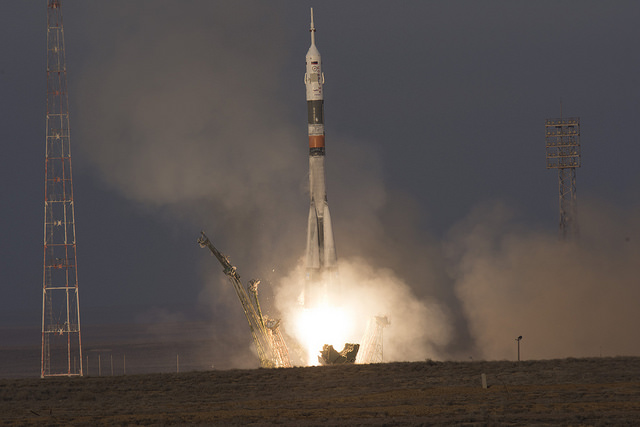
The SoyuzTMA-19M spacecraft blasting off atop a Soyuz rocket (Photo ESA-Stephane Corvaja)

A few hours ago the Soyuz TMA-19M spacecraft was launched from the Baikonur Cosmodrome in Kazakhstan and after about six anx a half hours reached the International Space Station carrying Tim Peake, Yuri Malenchenko and Tim Kopra. The Soyuz used the fast path normally used but it took a bit longer than anticipated because of a problem with the automatic docking system: as a consequence, the maneuver was conducted manually.

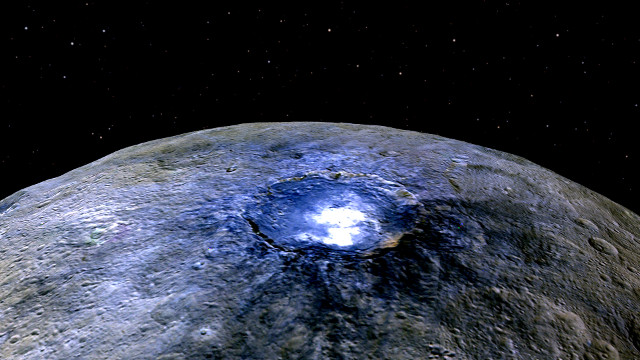
Occator Crater in falso colors stressing the white spots (Image NASA/JPL-Caltech/UCLA/MPS/DLR/IDA)

Two studies published in the journal “Nature” offered new interesting information about the dwarf planet Ceres. Thanks to analyzes of data collected by NASA’s Dawn space probe the authors of these studies claim that the mysterious white spots are composed of salts and that on Ceres there are ammonia-rich clays. The explanations about the materials that make up the white spots may solve a mystery while the presence of ammonia creates another, linked to the origin of this dwarf planet.

Kjell Lindgren, Oleg Kononenko and Kimiya Yui (Photo NASA)

A little while ago, cosmonaut Oleg Kononenko, NASA astronaut Kjell Lindgren and JAXA astronaut Kimiya Yui returned to Earth on the Soyuz TMA-17M spacecraft, landed without problems in Kazakhstan. It was night when they landed and it was very cold so the crew that take care of assisting them was quicker than ever. They spent nearly five months on the International Space Station, where they arrived on July 23, 2015 as part of Expedition 44.