Planets

Sloping buttes and layered outcrops within the Murray Buttes (Image NASA/JPL-Caltech/MSSS)

NASA published a series of photographs taken by the Mars Rover Curiosity that show the landscape of the Martian area called “Murray Buttes”. Those are very high quality images captured on September 8, 2016 using the Mast Camera (MastCam) instrument, consisting of two cameras able to get among other things photographs in natural colors. The result is a breathtaking view which at the same time is very interesting from the scientific point of view because the photographed stratified rocks show traces of Mars’ geological history.

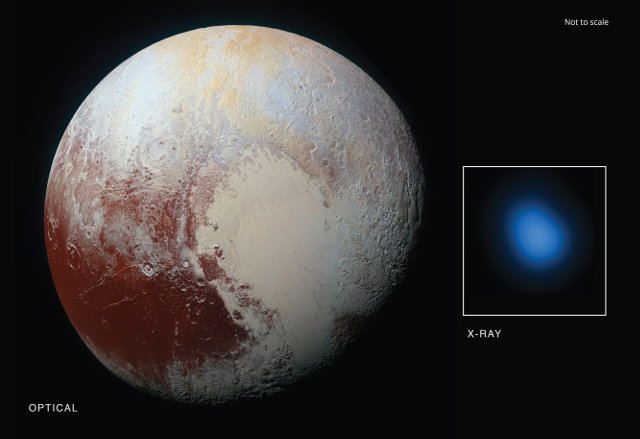
Pluto seen at visible light and at X-rays (not in scale) (Image X-ray: NASA/CXC/JHUAPL/R.McNutt et al; Optical: NASA/JHUAPL)

Two new research are connected in different ways to emissions coming from the dwarf planet Pluto. An article published in the journal “Icarus” describes a research which, through the use of the NASA’s Chandra X-ray Observatory, detected X-rays emissions from Pluto. Another article published in the journal “Nature” offers an explanation for the reddish color to Charon’s poles, caused by methane ripped from Pluto’s atmosphere and turned into ice by the low temperatures.

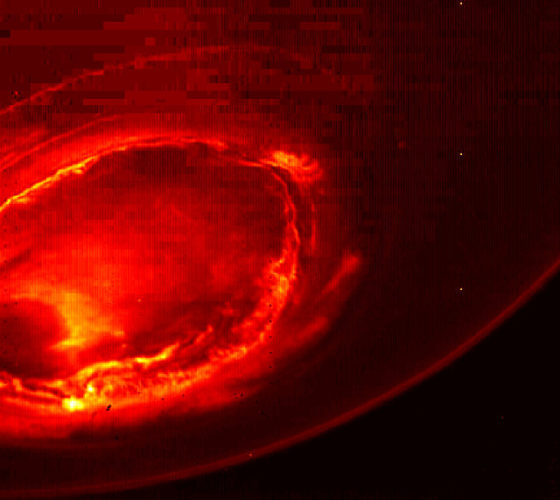
The southern aurora of Jupiter seen at infrareds (Image NASA/JPL-Caltech/SwRI/ASI/INAF/JIRAM)

NASA published the first results of the Jupiter flyby the Juno space probe performed on August 27, 2016. In about six hours, Juno reached a distance of 4.200 kilometers (2,500 miles) from the planet and above all passed above both north and south poles. The result is a series of images of the aurora at infrareds with many detail never seen before.

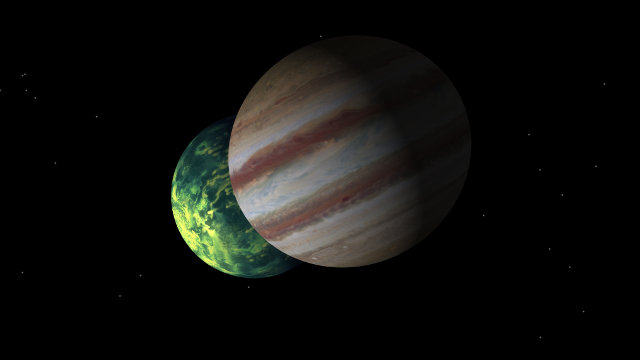
Jupiter compared to the hot-Jupiter HD 189733b (Image NASA/JPL-Caltech)

According to an astronomer estimate the Milky Way alone could host one billion gas giant planets like Jupiter. Twenty years of exoplanet discoveries and studies taught us that there are different types of Jovians and their study is important to understand the evolution of a solar system, including our own, given the influence of a planet of that mass. On the other hand, the study of Jupiter also helps our general understand of that class of exoplanets.