SpaceX

Blogs about SpaceX activities

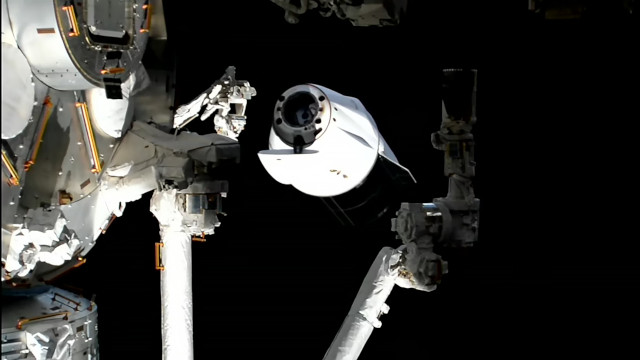
The Dragon cargo spacecraft departing the International Space Station to end its CRS-33 mission (Image NASA+)

A little while ago, SpaceX’s Dragon spacecraft ended its CRS-33 (Cargo Resupply Service 33) mission for NASA splashing down smoothly off the coast of California. The Dragon left the International Space Station about 12 hours earlier. The Dragon spacecraft had reached the International Space Station on August 25, 2025. For SpaceX, it was the 50th mission to the Station, including the Dragon cargo and Crew Dragon crewed missions.

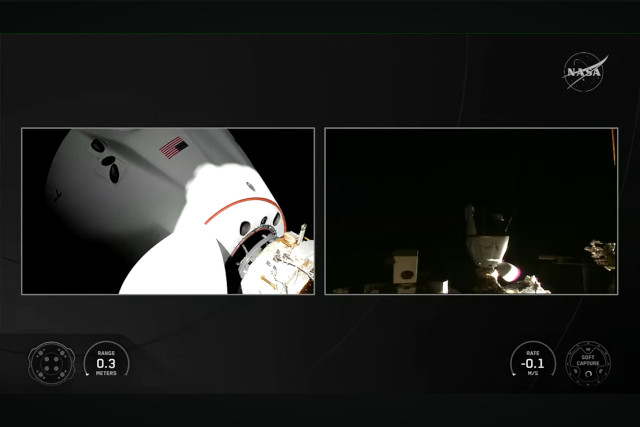
Views of the Crew Dragon Freedom spacecraft docking with the International Space Station in its Crew-12 mission (Image NASA+)

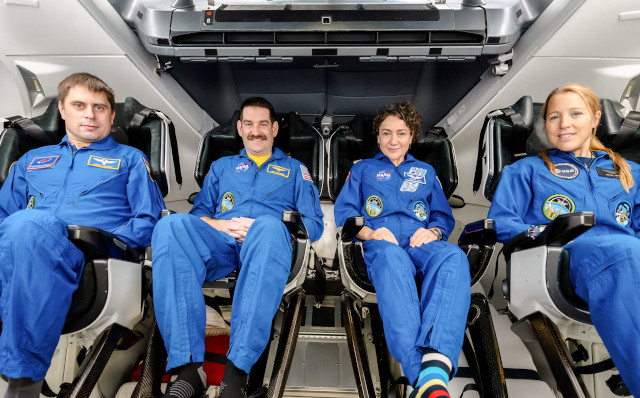
A few hours ago, SpaceX’s Crew Dragon Freedom spacecraft docked with the Harmony module of the International Space Station, completing the first part of its Crew-12 or SpaceX Crew-12 mission that began with its launch about 34 hours earlier. After checking that the pressure gets properly balanced, the hatch will be opened to allow Andrey Fedyaev, Jack Hathaway, Jessica Meir, and Sophie Adenot to enter the Station and start their mission.

The Crew-12 mission crew: Andrey Fedyaev, Jack Hathaway, Jessica Meir, and Sophie Adenot.

A little while ago, SpaceX’s Crew Dragon Freedom spacecraft blasted off atop a Falcon 9 rocket from the Kennedy Space Center in its Crew-12 or SpaceX Crew-12 mission. After almost exactly ten minutes, it successfully separated from the rocket’s last stage and went en route to carry out its mission. This is the 12th crewed mission of the Crew Dragon spacecraft within the normal rotation of the International Space Station crew.

A Falcon 9 rocket lifting off on the Twilight rideshare mission (Image courtesy SpaceX)

A few hours ago, a Falcon 9 rocket launched from Vandenberg Air Force Base on the Twilight rideshare mission, carrying a total of 40 satellites in various phases. About two hours and twenty minutes after launch, the final group of satellites was deployed by SpaceX’s system. Among them were NASA’s Pandora Space Telescope and the BlackCAT and SPARCS nanosatellites, both 30x20x10-centimeter CubeSat-class satellites, part of NASA’s CubeSat Launch Initiative. These satellites will conduct their astronomical observations from low-Earth orbit.

The Sentinel-6B satellite blasting off atop a Falcon 9 rocket (Image courtesy SpaceX)

A few hours ago, the Sentinel-6B satellite was launched atop a Falcon 9 rocket from the Vandenberg base. After about 57 minutes, it successfully separated from the rocket’s last stage and set off on its course to reach the polar orbit at 1,336 kilometers altitude where its scientific mission will begin, taking over from the Sentinel-6A Michael Freilich satellite, which was launched on November 21, 2020.