SpaceX

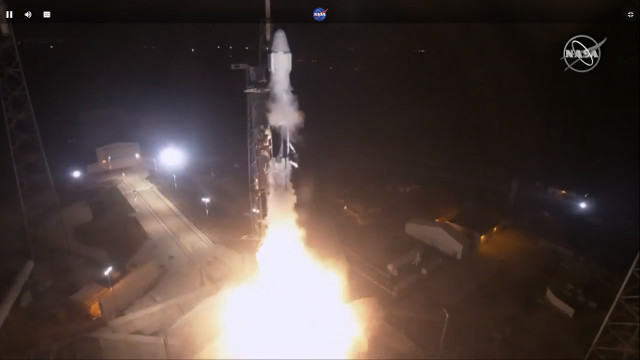
SpaceX's Falcon Heavy rocket blasting off in its Space Test Program-2 (STP-2) mission (Photo NASA/Joel Kowsky)

A few hours ago SpaceX launched its Falcon Heavy rocket from Cape Canaveral on a mission involving the launch of various satellites in low and medium Earth orbit. The most powerful rocket in business launched satellites on behalf of NASA, the US Air Force and other entities, incuding CubeSat-class nanosatellites built by students. The mission required four burns for the Falcon Heavy rocket’s upper stage to place them in the various orbits required. The mass of the payloads to be taken into orbit was relatively small – around 3,700 kg – but the second stage needed a lot of fuel to carry out all the maneuvers required in this mission, therefore the initial thrust of the Falcon Heavy was needed.

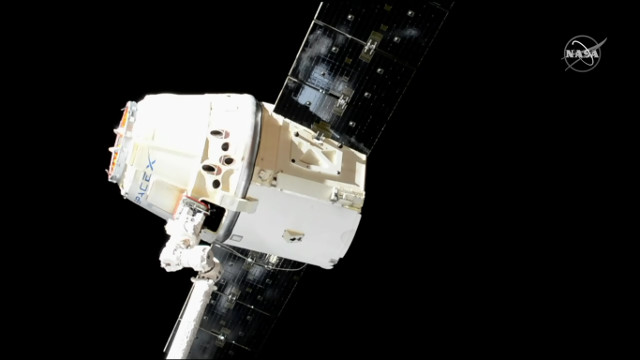
The Dragon cargo spacecraft departing the International Space Station to end its CRS-17 mission (Image NASA TV)

A few hours ago the SpaceX Dragon spacecraft ended its CRS-17 (Cargo Resupply Service 17) mission for NASA splashing down smoothly in the Pacific Ocean a little more than 325 kilometers (about 202 miles) off the coast of California. The Dragon left the International Space Station a few hours earlier.

Shortly after landing, SpaceX boats went to retrieve the Dragon to transport it to the coast. The cargo brought back to Earth will be delivered to NASA soon, probably tomorrow. The Dragon spacecraft reached the International Space Station on May 6, 2019.

60 Starlink satellites blasting off a Falcon 9 rocket (Image courtesy SpaceX)

A few hours ago 60 satellites of the Starlink constellation were launched on a Falcon 9 rocket from Cape Canaveral. After just over an hour they were successfully deployed into their orbit at an altitude of about 440 kilometers all together and then started slowly disperse. This is SpaceX’s first mission to put the Starlink constellation into orbit to provide a global Internet connection coverage.

The Dragon space cargo ship starting its CRS-17 mission blasting off atop a Falcon 9 rocket (Image NASA TV)

A little while ago the SpaceX Dragon spacecraft blasted off atop a Falcon 9 rocket from Cape Canaveral in its CRS-17 (Cargo Resupply Service 17) mission, also referred to as SPX-17. After just over ten minutes it separated successfully from the rocket’s last stage and went en route. This is the 17th mission for the Dragon spacecraft to resupply the International Space Station with various cargoes and then return to Earth, again with various cargoes.