Space Probes

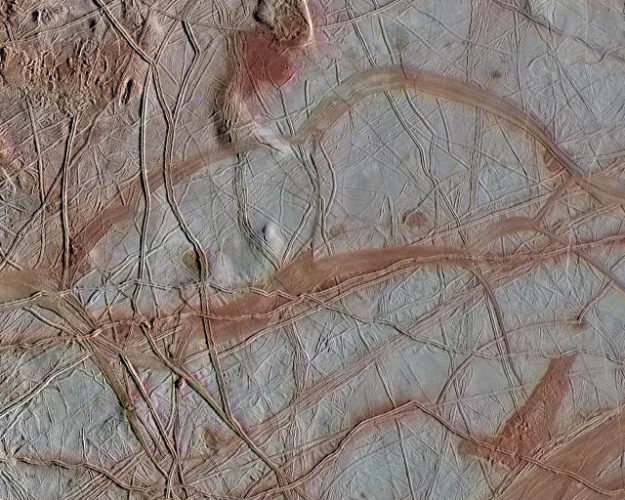
Europa's surface with its icy crust full of fractures (Photo NASA/JPL-Caltech/SETI Institute)

An article published in the journal “Geophysical Research Letters” describes a research on chemical characteristics existing in the underground ocean of Europa, one of the planet Jupiter’s big moons. A team of scientists at NASA’s Jet Propulsion Laboratory team (JPL) compared the potential to produce hydrogen and oxygen with that of the Earth, concluding that they’re comparable.

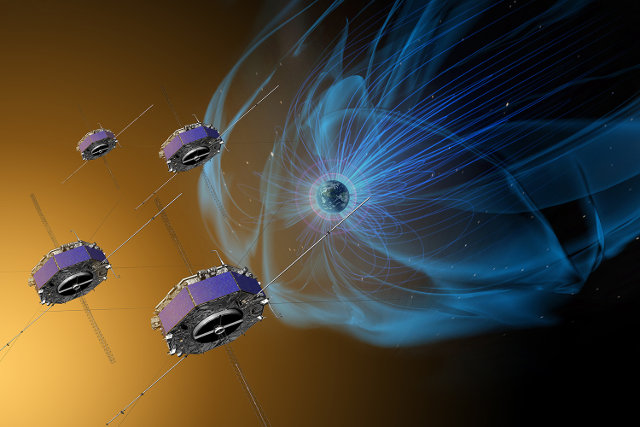
Artistic concept of the MMS space probes at the boundaries of the Earth's magnetic field (Image NASA/Goddard/Conceptual Image Lab)

An article published in the journal “Science” describes the first direct observation of the phenomenon called magnetic reconnection. NASA’s four MMS twin space probes allowed to obtain the best observations made so far of the interaction between the Earth and Sun’s magnetic fields. According to the researchers who analyzed the data collected, electrons trigger this phenomenon.

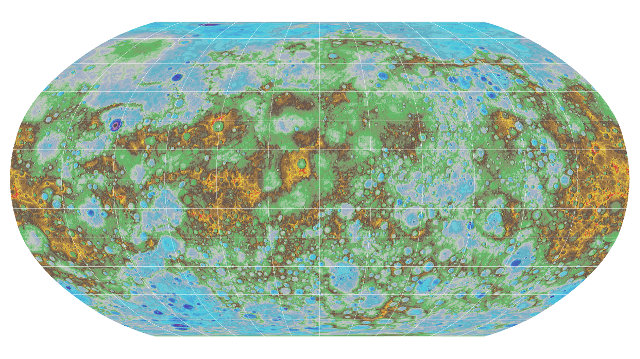
Topographic map of the planet Mercury (Image USGS)

NASA’s MESSENGER mission has published the first complete topographical map of the planet Mercury. To be precise, it’s a Digital Elevation Model (DEM), a representation of the elevation distribution of territory, or of another surface, in digital format. It’s the product of the processing of data collected by the MESSENGER space probe during its mission ended just over a year ago.

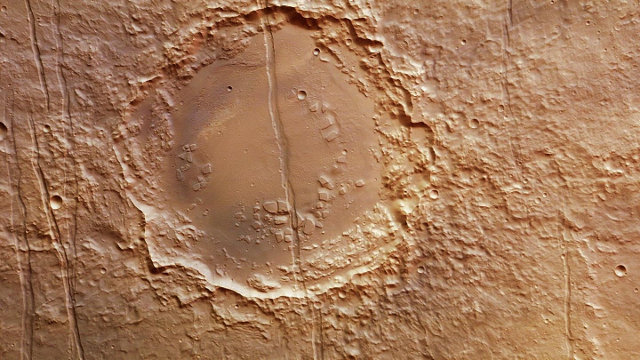
Crater in Memnonia Fossae (Image DLR)

The German space agency DLR published photos of a curious crater marked by a deep rift that splits it in two in the area of ​​Mars called Memnonia Fossae. These are photos taken by the High Resolution Stereo Camera (HRSC), one of the instruments of ESA’s Mars Express space probe.

Artistic concept of the Venus Express space probe during an aerobraking maneuver (Image ESA–C. Carreau)

An article published in the journal “Nature Physics” describes an analysis of the data collected by ESA’s Venus Express space probe during the final phase of its mission. After about eight years orbiting the planet Venus, in 2014 it was sent down lower and lower into the atmosphere, where it collected many new data before ending up getting destroyed. This allowed for example to discover the extraordinarily low temperatures of some atmospheric waves that have an average of about -157° Celsius (about -250° Fahrenheit).