Telescopes

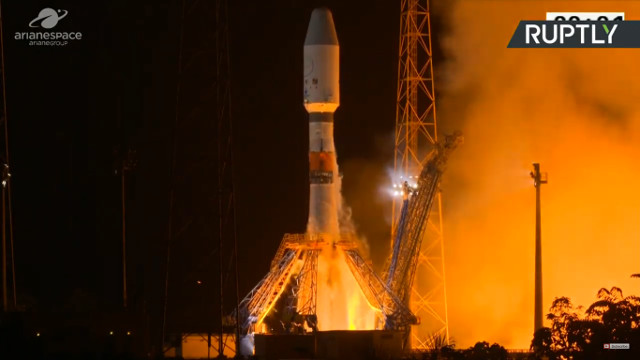
CHEOPS and Cosmo-SkyMed Second Generation blasting off atop aSoyuz rocket (Image courtesy Arianespace)

A few hours ago a Soyuz rocket was launched from the Kourou base, in French Guiana. After about 23 minutes the Cosmo-SkyMed Second Generation satellite successfully separated from the rocket’s Fregat last stage. About 85 minutes after the launch, the CHEOPS space telescope successfully separated from the rocket’s Fregat last stage.

The COSMO-SkyMed Second Generation satellite is the first of a constellation of two satellites that aims to replace the first generation’s four satellites. It’s a system of radar satellites for the territory observation, the result of a collaboration between the Italian Space Agency and the Italian Ministry of Defense.

The purpose of ESA’s CHEOPS (Characterizing ExOPlanets Satellite) space telescope is to conduct follow-up study of exoplanets using the transit method, which means observing the ones that pass in front of their star.

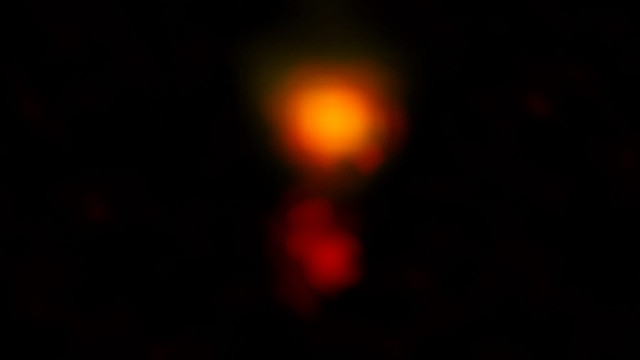
MAMBO-9 is a dusty galaxy 13 billion light years away

An article published in “The Astrophysical Journal” reports a study on a dusty early galaxy known as MAMBO-9. A team of researchers led by Caitlin Casey of the University of Texas at Austin used the ALMA radio telescope to study this galaxy about 13 billion light years away and its star formation rate much higher than the Milky Way’s. The observations showed that actually they’re two galaxies during a merger. That’s all useful to understand the role of dusty galaxies like that one in the evolution of the universe.

The report of Jupiter's Great Red Spot demise might be greatly exaggerated

At the 72nd Annual Meeting of the APS Division of Fluid Dynamics, held in recent days in Seattle, Philip Marcus of the University of California, Berkeley, presented a study on Jupiter’s Great Red Spot. According to recent research, it’s shrinking but according to this new study based on photos and computer simulations that’s actually an impression due to clouds covering a part of it.

Interstellar comet 2I/Borisov seen from the Keck Observatory

A new photo of interstellar comet 2I/Borisov taken using a spectrometer at the Keck Observatory in Hawaii is now the best obtained so far and can offer new information on this object that is going through the solar system. Astronomers Pieter van Dokkum, Cheng-Han Hsieh, Shany Danieli and Gregory Laughlin of Yale University captured this image on November 24 and it includes the comet’s tail, shown in its length of nearly 160,000 kilometers in a composition that puts together 2I/Borisov and the Earth.

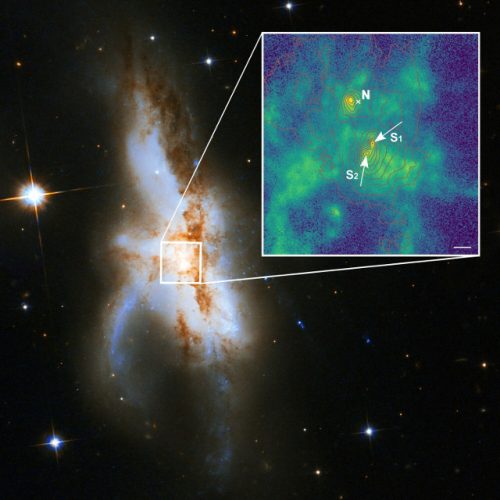
The galaxy NGC 6240 contains three supermassive black holes

An article published in the journal “Astronomy & Astrophysics” reports a study on the galaxy NGC 6240 with evidence that it contains three supermassive black holes. A team of researchers led by Professor Wolfram Kollatschny of the University of Göttingen used the MUSE instrument mounted on ESO’s VLT in Chile together with data from previous studies to obtain the high-precision observations needed to verify that within NGC 6240 there were not two supermassive black holes as it seemed from previous studies but three. This indicates that the current merger is involving three galaxies.