Satellites

Blog about satellites: launches, operations, studies, fall.

A Falcon 9 rocket lifting off on the Twilight rideshare mission (Image courtesy SpaceX)

A few hours ago, a Falcon 9 rocket launched from Vandenberg Air Force Base on the Twilight rideshare mission, carrying a total of 40 satellites in various phases. About two hours and twenty minutes after launch, the final group of satellites was deployed by SpaceX’s system. Among them were NASA’s Pandora Space Telescope and the BlackCAT and SPARCS nanosatellites, both 30x20x10-centimeter CubeSat-class satellites, part of NASA’s CubeSat Launch Initiative. These satellites will conduct their astronomical observations from low-Earth orbit.

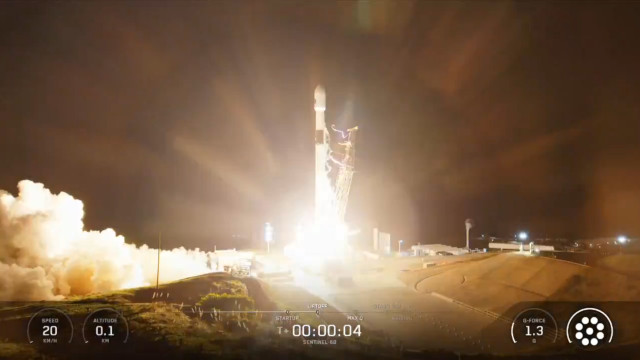
The Sentinel-6B satellite blasting off atop a Falcon 9 rocket (Image courtesy SpaceX)

A few hours ago, the Sentinel-6B satellite was launched atop a Falcon 9 rocket from the Vandenberg base. After about 57 minutes, it successfully separated from the rocket’s last stage and set off on its course to reach the polar orbit at 1,336 kilometers altitude where its scientific mission will begin, taking over from the Sentinel-6A Michael Freilich satellite, which was launched on November 21, 2020.

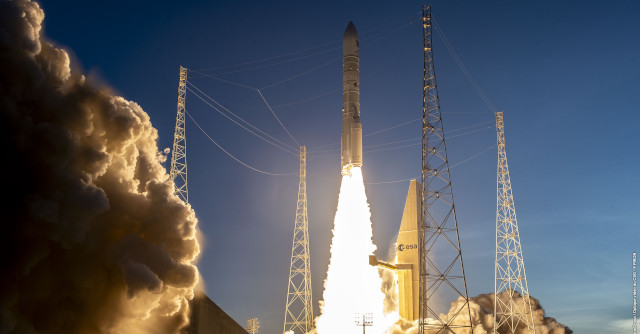
The Sentinel-1D satellite blasting off atop an Ariane 6 rocket (Photo courtesy ESA-CNES-ARIANESPACE/Optique vidéo du CSG–P. Piron. ESA Standard Licence)

A few hours ago, the Sentinel-1D satellite, part of the Copernicus / GMES, was launched from the Kourou spaceport, in French Guiana, atop an Ariane 6 rocket. After about 34 minutes, the satellite regularly separated from the rocket’s last stage and started sending signals. Its final orbit in low Earth orbit will be at an altitude of about 693 kilometers.

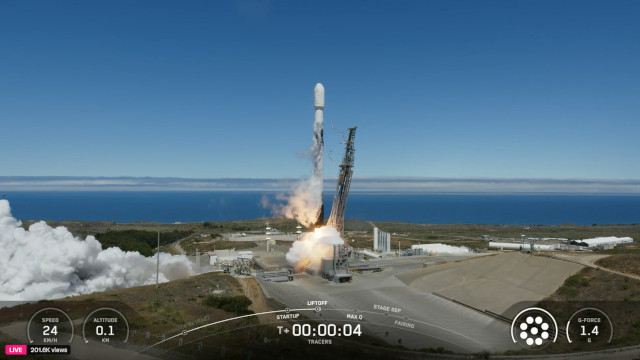
The TRACERS satellites blasting off atop a Falcon 9 rocket (Image SpaceX)

A few hours ago, NASA’s two TRACERS satellites were launched atop a SpaceX Falcon 9 rocket from the Vandenberg Air Force Base. After about an hour and 40 minutes, they successfully separated from the rocket’s last stage to begin the maneuvers that will place them in a Sun-synchronous orbit at an altitude of 600 kilometers.

The two TRACERS (Tandem Reconnection and Cusp Electrodynamics Reconnaissance Satellites) twin satellites join other space missions aimed at studying the Sun and its interactions with the Earth. The PUNCH mission was launched on March 12, and on March 15, the three CubeSat-class nanosatellites of the EZIE (Electrojet Zeeman Imaging Explorer) mission were launched. EZIE’s goal is to study changes in electrical currents moving through the upper layers of Earth’s atmosphere in the polar regions.

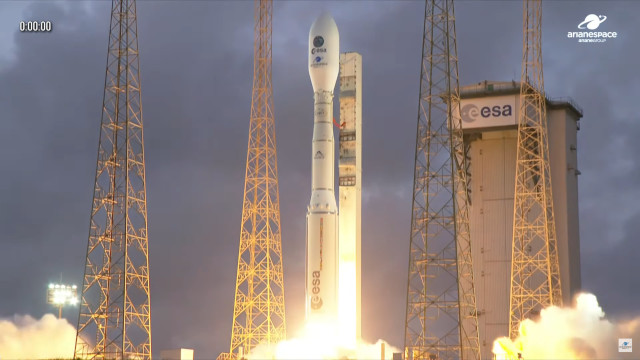
The Biomass satellite blasting off atop a Vega-C rocket (Image courtesy Arianespace)

A little while ago, the Biomass satellite was launched atop a Vega-C rocket from the Kourou base in French Guiana. After about 58 minutes, it successfully separated from the rocket’s last stage and set off on a course that will take it to its Sun-synchronous orbit at an altitude of 666 kilometres, where it will study the biomass of forests around the world. This work will help us better understand the global carbon cycle and forest ecosystems.