NASA

The New Horizons space probe performed its Ultima Thule flyby

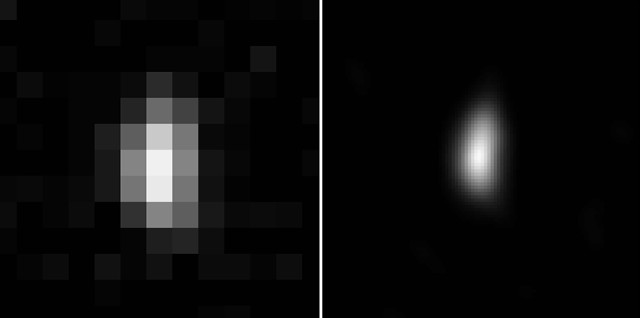
NASA’s New Horizons spacecraft has just completed its flyby of the object known as 2014 MU69 and nicknamed Ultima Thule. The automatic program to proceed with the photos and the other detections of its target was activated a few days ago so, after sending the last images taken when it was still almost two million kilometers away, New Horizons aimed its instruments at Ultima Thule. If all went well, in the next few hours it will communicate it to the mission control center and start sending the data it collected, a process that will continue for an estimated time in about 20 months.

Great telescopes to study Comet 46P/Wirtanen

Various telescopes such as the Hubble Space Telescope, the SOFIA flying telescope and the ALMA radio telescope were used to examine the innermost region of Comet 46P/Wirtanen, nicknamed the Christmas comet because in recent days it made an Earth flyby. This expression has to be considered in a broad sense since it reached 11.6 million kilometers (more than 7 million miles) on December 16. This was enough to obtain interesting information such as the detection of hydrogen cyanide molecules in its nucleus by ALMA.

Asteroid Bennu (Image NASA/Goddard/University of Arizona)

NASA has announced that its OSIRIS-REx space probe has found traces of water in the asteroid Bennu, reached on December 3. This is water bound to minerals present on Bennu’s surface, hydrated silicates formed in the very early stages of the solar system’s history, when the first small bodies such as the asteroids started forming.