May 2026

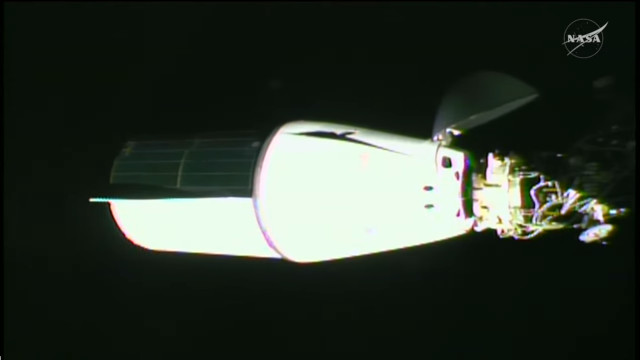
The capsule of the Shenzhou 22 spacecraft after landing (Photo courtesy Xinhua/Lian Zhen)

A few hours ago, the three Chinese taikonauts of the Shenzhou 22 mission returned to Earth after spending 210 days on the Tiangong space station, where they arrived on October 31, 2025, in the mission that started as Shenzhou 21. The three taikonauts, Zhang Lu, Wu Fei, and Zhang Hongzhang, had departed the station less than six hours earlier to land at a site called Dongfeng in China’s Inner Mongolia Autonomous Region.

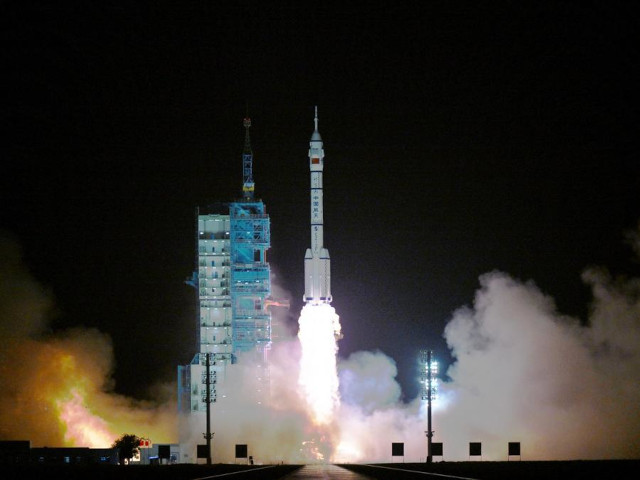
The Shenzhou 23 spacecraft blasting off (Photo courtesy Xinhua/Lian Zhen)

A confirmation has arrived that three Chinese taikonauts from the Shenzhou 23 mission reached the Chinese space station Tiangong with an automated docking maneuver. They blasted off about 3.5 hours earlier atop a Long March-2F rocket from the Jiuquan Satellite Launch Center. Two of them will remain there for about six months, the standard duration for a mission, while the third taikonaut will conduct a one-year mission.

The three taikonauts, as the Chinese call their astronauts, on the Shenzhou 23 mission are Zhu Yangzhu, Zhang Zhiyuan, and Lai Ka-ying. The identities of the crew members are revealed only at the last minute, but Chinese authorities have recently started releasing more information than they did a few years ago.

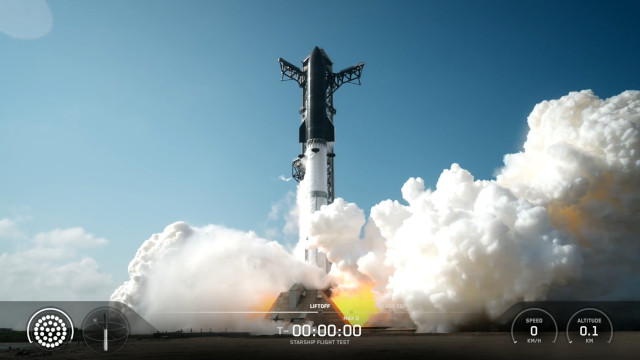
Super Heavy 19 and Starship 39 at liftoff (Image courtesy SpaceX)

It was the afternoon in the USA when SpaceX conducted a new flight test of its Super Heavy rocket and Starship prototypes, launched from its base in Boca Chica, Texas. This is the 12th test involving the entire system of Elon Musk’s company, which is supposed to revolutionize space travel with an unprecedented transport capacity and being totally reusable. They are advanced prototypes with the Super Heavy identified as Booster 19 and the Starship identified as Starship 39 or Ship39 or simply S39. It was the first test of the vehicles in their Block 3 version.

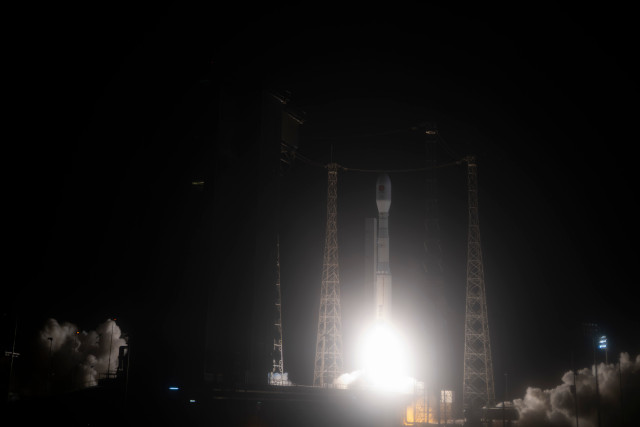
The Smile satellite blasting off atop a Vega-C rocket (Photo ESA-S. Corvaja - ESA Standard License)

A few hours ago, the Smile satellite was launched from the Kourou Spaceport in French Guiana atop a Vega-C rocket. After about 56 minutes, the Smile satellite separated from the rocket’s last stage and began maneuvers that are scheduled to last approximately 25 days. Eleven burns of the spacecraft’s engines will lengthen its orbit, initially circular at an altitude of approximately 700 kilometers, to approximately 121,000 kilometers above the North Pole and approximately 5,000 kilometers above the South Pole.