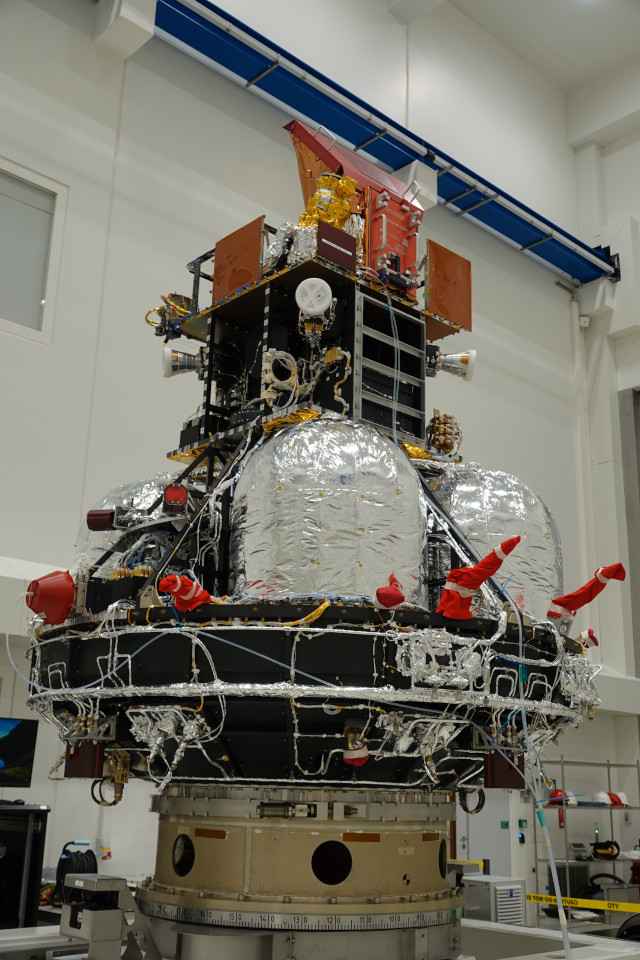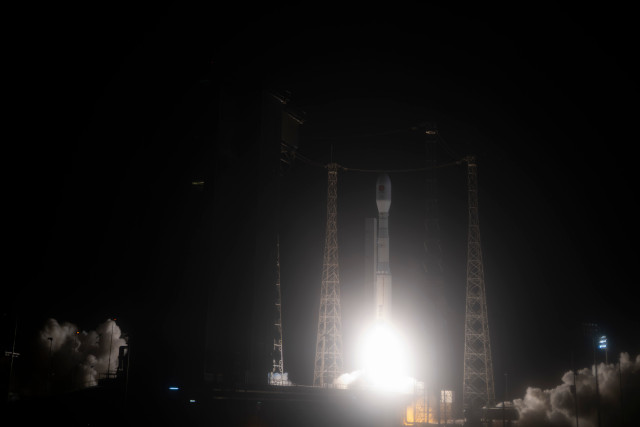
A few hours ago, the Smile satellite was launched from the Kourou Spaceport in French Guiana atop a Vega-C rocket. After about 56 minutes, the Smile satellite separated from the rocket’s last stage and began maneuvers that are scheduled to last approximately 25 days. Eleven burns of the spacecraft’s engines will lengthen its orbit, initially circular at an altitude of approximately 700 kilometers, to approximately 121,000 kilometers above the North Pole and approximately 5,000 kilometers above the South Pole.
The Smile (Solar Wind Magnetosphere Ionosphere Link Explorer) mission is a joint project between ESA and the Chinese Academy of Sciences, and is part of ESA’s Cosmic Vision program, which aims to improve our understanding of the solar system. In this case, the focus is on the solar wind and how Earth responds to it. Geomagnetic storms and auroras show, in sometimes spectacular ways, the effects of charged particles from the Sun on the Earth’s magnetosphere.
The Smile satellite is equipped with four instruments designed to study the effects of the solar wind in various ways. It’s not the first mission designed to study the magnetosphere and its interactions with the solar wind, and each new satellite offers new insights. The Smile mission is the first to focus on the mechanisms that lead to the transfer of energy from the solar wind to the Earth’s atmosphere to observe them fully on a global scale.
The Smile satellite will capture X-ray and ultraviolet images as well. This is possible because the interactions between solar wind particles and those in the Earth’s atmosphere’s upper layers generate energy levels that lead to emissions in those electromagnetic bands.
The testing period for the onboard instruments and the deployment of the boom to which the magnetometer is attached is scheduled to last approximately three months. If all goes well, the so-called first light will arrive, when the Smile satellite will capture its first X-ray and ultraviolet images, an event that will mark the beginning of its 3-year primary scientific mission.
Solar activity can become violent, and solar storms can damage everything in orbit and, in the most severe cases, even equipment and electrical grids on the ground. A better understanding of these dangers helps improve space weather forecasts and develop countermeasures to protect equipment in times of intense solar activity.